

|
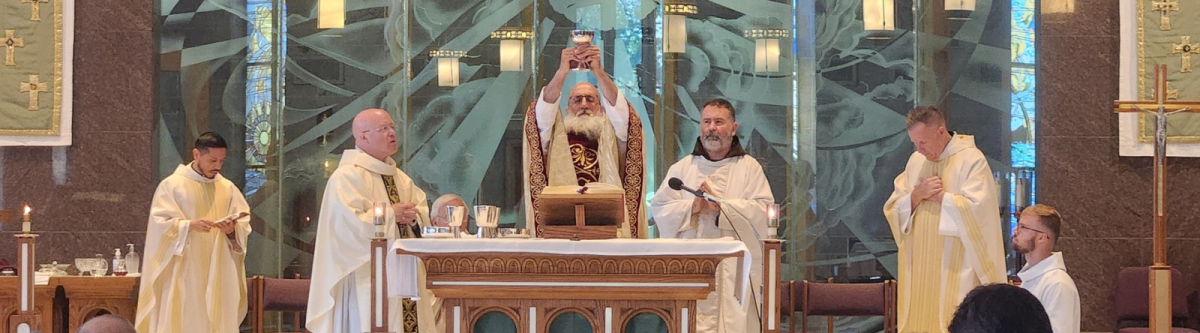
For guidelines and information for this Sacrament, please contact the Religious Education Office at 317-357-6915 or at This email address is being protected from spambots. You need JavaScript enabled to view it. FIRST HOLY COMMUNION AT HOLY SPIRIT CATHOLIC CHURCHThe Sacrament of First Communion is celebrated along with the Sacrament of Reconciliation for 2nd graders and older. Candidates for this Sacrament need to be enrolled in the Religious Education program or enrolled in Holy Spirit Catholic School. Parents must be active registered members of Holy Spirit Catholic Church and have completed all paperwork required of the Religious Education Office. The other sacraments, and indeed all ecclesiastical ministries and works of the apostolate, are bound up with the Eucharist and are oriented toward it (CCC 1324). The liturgical life of the Church revolves around the sacraments, with the Eucharist at the center (National Directory for Catechesis, #35). At Mass, we are fed by the Word and nourished by the Body and Blood of Christ. We believe that the Risen Jesus is truly and substantially present in the Eucharist. The Eucharist is not a sign or symbol of Jesus; rather we receive Jesus himself in and through the Eucharistic species. The priest, through the power of his ordination and the action of the Holy Spirit, transforms the bread and wine into the Body and Blood of Jesus. This is call transubstantiation. By the consecration the transubstantiation of the bread and wine into the Body and Blood of Christ is brought about. Under the consecrated species of bread and wine Christ himself, living and glorious, is present in a true, real, and substantial manner: his Body and his Blood, with his soul and his divinity (CCC 1413). The New CovenantI am the living bread that came down from heaven; whoever eats this bread will live forever;…Whoever eats my flesh and drinks my blood has eternal life and…remains in me and I in him (John 6:51, 54, 56). In the gospels, we read that the Eucharist was instituted at the Last Supper. This is the fulfillment of the covenants in the Hebrew Scriptures. In the Last Supper narratives, Jesus took, broke and gave bread and wine to his disciples. In the blessing of the cup of wine, Jesus calls it “the blood of the covenant” (Matthew and Mark) and the “new covenant in my blood” (Luke). This reminds us of the blood ritual with which the covenant was ratified at Sinai (Ex 24) -- the sprinkled the blood of sacrificed animals united God and Israel in one relationship, so now the shed blood of Jesus on the cross is the bond of union between new covenant partners -- God the Father, Jesus and the Christian Church. Through Jesus’ sacrifice, all the baptized are in relationship with God. The Catechism teaches that all Catholics who have received their First Holy Communion are welcome to receive Eucharist at Mass unless in a state of mortal sin. Anyone who desires to receive Christ in Eucharistic communion must be in the state of grace. Anyone aware of having sinned mortally must not receive communion without having received absolution in the sacrament of penance (CCC 1415). The Church warmly recommends that the faithful receive Holy Communion when they participate in the celebration of the Eucharist; she obliges them to do so at least once a year (CCC 1417). Receiving the Eucharist changes us. It signifies and effects the unity of the community and serves to strengthen the Body of Christ. Understanding the MassThe central act of worship in the Catholic Church is the Mass. It is in the liturgy that the saving death and resurrection of Jesus once for all is made present again in all its fullness and promise – and we are privileged to share in His Body and Blood, fulfilling his command as we proclaim his death and resurrection until He comes again. It is in the liturgy that our communal prayers unite us into the Body of Christ. It is in the liturgy that we most fully live out our Christian faith. The liturgical celebration is divided into two parts: the Liturgy of the Word and the Liturgy of the Eucharist. First we hear the Word of God proclaimed in the scriptures and respond by singing God’s own Word in the Psalm. Next that Word is broken open in the homily. We respond by professing our faith publicly. Our communal prayers are offered for all the living and the dead in the Creed. Along with the Presider, we offer in our own way, the gifts of bread and wine and are given a share in the Body and Blood of the Lord, broken and poured out for us. We receive the Eucharist, Christ’s real and true presence, and we renew our commitment to Jesus. Finally, we are sent forth to proclaim the Good News! |
Para obtener directrices e información sobre este Sacramento, póngase en contacto con la Oficina de Educación Religiosa en el 317-357-6915 o en This email address is being protected from spambots. You need JavaScript enabled to view it.. PRIMERA COMUNIÓN EN LA IGLESIA CATÓLICA DEL ESPÍRITU SANTOEl Sacramento de la Primera Comunión se celebra junto con el Sacramento de la Reconciliación para los alumnos de 2º grado en adelante. Los candidatos para este Sacramento necesitan estar inscritos en el programa de Educación Religiosa o inscritos en la Escuela Católica del Espíritu Santo. Los padres deben ser miembros activos registrados de la Iglesia Católica del Espíritu Santo y haber completado todo el papeleo requerido por la Oficina de Educación Religiosa. Los demás sacramentos, y de hecho todos los ministerios eclesiásticos y las obras de apostolado, están unidos a la Eucaristía y orientados hacia ella (CIC 1324). La vida litúrgica de la Iglesia gira en torno a los sacramentos, con la Eucaristía en el centro (Directorio Nacional para la Catequesis, #35). En la Misa, nos alimentamos de la Palabra y nos nutrimos del Cuerpo y la Sangre de Cristo. Creemos que Jesús resucitado está verdadera y sustancialmente presente en la Eucaristía. La Eucaristía no es un signo o símbolo de Jesús, sino que recibimos a Jesús mismo en y a través de las especies eucarísticas. El sacerdote, por el poder de su ordenación y la acción del Espíritu Santo, transforma el pan y el vino en el Cuerpo y la Sangre de Jesús. Esto se llama transubstanciación. Mediante la consagración se realiza la transubstanciación del pan y el vino en el Cuerpo y la Sangre de Cristo. Bajo las especies consagradas del pan y del vino, Cristo mismo, vivo y glorioso, está presente de manera verdadera, real y sustancial: su Cuerpo y su Sangre, con su alma y su divinidad (CIC 1413). La Nueva AlianzaYo soy el pan vivo bajado del cielo; el que come este pan vivirá para siempre;...El que come mi carne y bebe mi sangre tiene vida eterna y...permanece en mí y yo en él (Jn 6,51.54.56). En los Evangelios leemos que la Eucaristía fue instituida en la Última Cena. Es el cumplimiento de las alianzas de las Escrituras hebreas. En los relatos de la Última Cena, Jesús tomó, partió y dio pan y vino a sus discípulos. En la bendición de la copa de vino, Jesús la llama "la sangre de la alianza" (Mateo y Marcos) y "la nueva alianza en mi sangre" (Lucas). Esto nos recuerda el ritual de la sangre con el que se ratificó la alianza en el Sinaí (Ex 24): la sangre rociada de los animales sacrificados unía a Dios e Israel en una sola relación, de modo que ahora la sangre derramada de Jesús en la cruz es el vínculo de unión entre los compañeros de la nueva alianza: Dios Padre, Jesús y la Iglesia cristiana. A través del sacrificio de Jesús, todos los bautizados están en relación con Dios. El Catecismo enseña que todos los católicos que han recibido la Primera Comunión pueden recibir la Eucaristía en la Misa, a menos que se encuentren en estado de pecado mortal. Quien desee recibir a Cristo en la comunión eucarística debe estar en estado de gracia. Quien tenga conciencia de haber pecado mortalmente no debe comulgar sin haber recibido la absolución en el sacramento de la penitencia (CIC 1415). La Iglesia recomienda vivamente a los fieles que comulguen cuando participen en la celebración de la Eucaristía; les obliga a hacerlo al menos una vez al año (CIC 1417). Recibir la Eucaristía nos cambia. Significa y realiza la unidad de la comunidad y sirve para fortalecer el Cuerpo de Cristo. Understanding the MassThe central act of worship in the Catholic Church is the Mass. It is in the liturgy that the saving death and resurrection of Jesus once for all is made present again in all its fullness and promise – and we are privileged to share in His Body and Blood, fulfilling his command as we proclaim his death and resurrection until He comes again. It is in the liturgy that our communal prayers unite us into the Body of Christ. It is in the liturgy that we most fully live out our Christian faith. The liturgical celebration is divided into two parts: the Liturgy of the Word and the Liturgy of the Eucharist. First we hear the Word of God proclaimed in the scriptures and respond by singing God’s own Word in the Psalm. Next that Word is broken open in the homily. We respond by professing our faith publicly. Our communal prayers are offered for all the living and the dead in the Creed. Along with the Presider, we offer in our own way, the gifts of bread and wine and are given a share in the Body and Blood of the Lord, broken and poured out for us. We receive the Eucharist, Christ’s real and true presence, and we renew our commitment to Jesus. Finally, we are sent forth to proclaim the Good News! |
Eucharist | Eucaristía